How to read Japanese mechanical drawings (JIS)
Not everyone can understand deeply and read Japanese mechanical drawings properly. So how to read the drawing properly? Let’s learn with me how to read Japanese mechanical drawings in the article below.
What is the JIS standard?
JIS Standard (English: Japanese Industrial Standards) is a Japanese industrial standard used in industrial activities in this country.
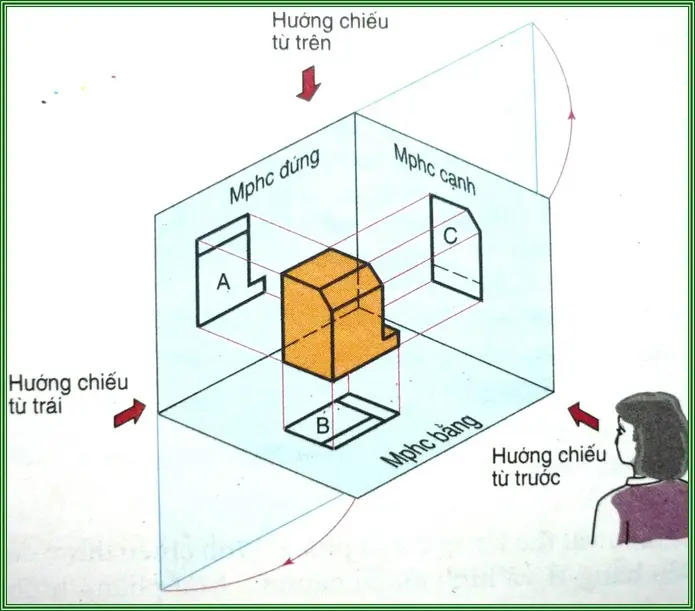
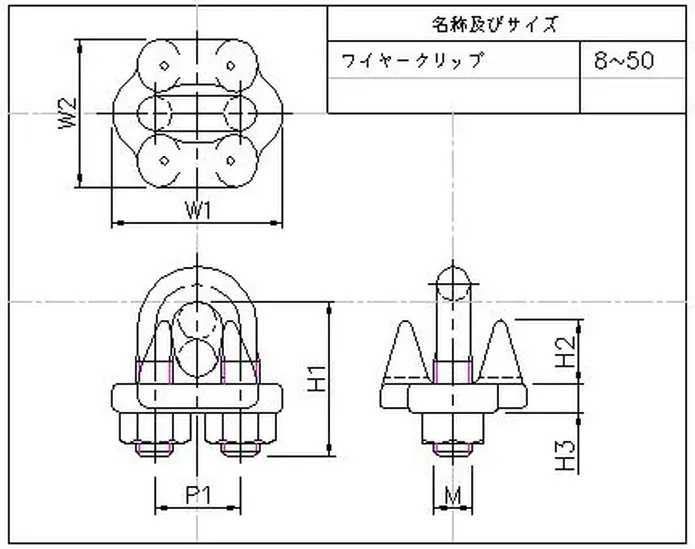
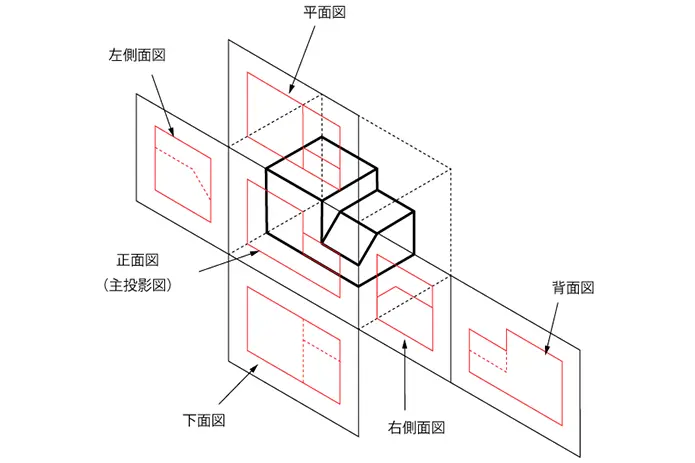
Unlike drawings in Vietnam, Japanese drawings have an edge-to-vertical projection layout and are used according to JIS standards – the 3rd angle projection method (illustration). In addition, when the processing details are complicated to clearly show the requirements to be processed, people will use cutting drawings and extract drawings.
Instructions on how to read Japanese mechanical drawings (JIS)
To understand how to layout and build projections according to JIS standards, please follow the reading below.
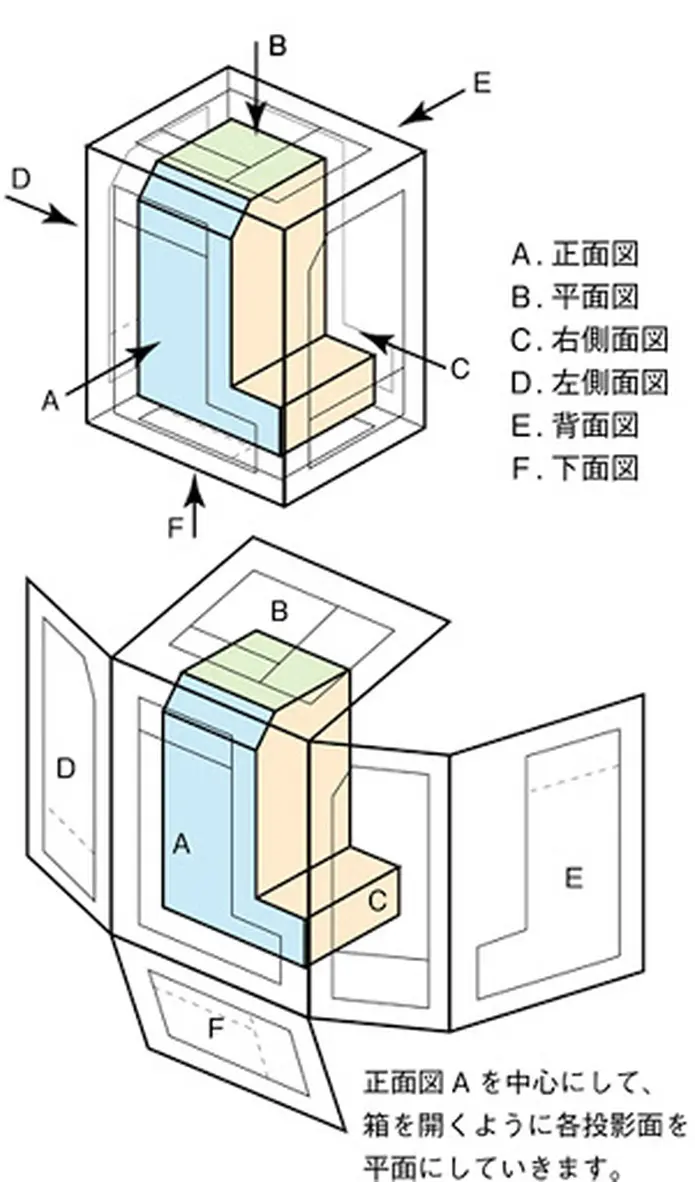
Suppose when there is a rectangular box with the symbol planes in the figure:
- Looking from the outside, you will see the object passing through the planes and showing the faces of the rectangular box with the corresponding lines (visible or hidden).
- If you open the planes of the box (shown below) you will get the corresponding projections of the object on the respective faces.
- The planes of the box that are spread on the same plane will be the projection planes of the object.
As a result, each object will have 6 corresponding planes, but usually only 3 faces are enough. If it’s simple, it’s 2 projections, while it’s complicated, it takes up to 6 faces to be projected and the cut and extracted images to show all the objects. In which, the projection always has the main view to be able to see the whole object.
Draw projection from bright object 2D model
In addition to applying the above standard, you also have to know how to imagine the object to be able to draw accurately and quickly.
– From the object, you will draw the following 2D projections:
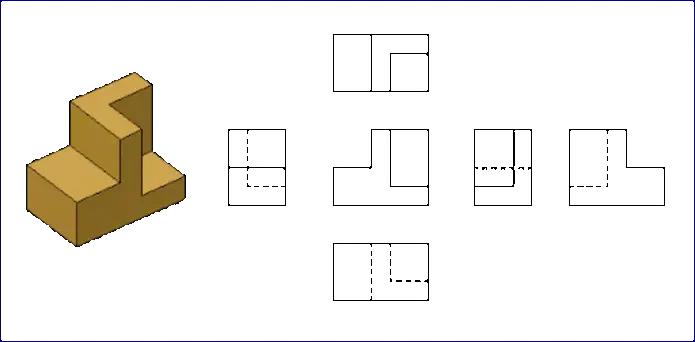
– You will draw and arrange the corresponding projections as above.
When drawing, you must draw the faces that show the most clearly and easily visualize the object. At the same time, limit the dashed directions and the number of projections just enough to visualize the object.
From the projection of 2D models to build real objects
In order to build a real body from a 2D view, technicians need to master the rules of viewing the image above.
From 2D drawings to build objects, you must visualize 3D objects. This is the ultimate goal of reading engineering drawings.
– From the 2D projection, build the object as follows:
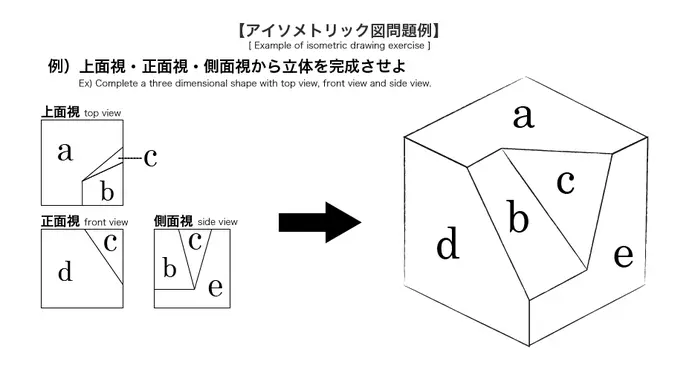
When starting to edit, you should sketch the object from the projection so that the image uses the object. Then, based on the remaining shapes to build the next object, you can cut or add blocks.
Reference source: blog.mecsu.vn
-
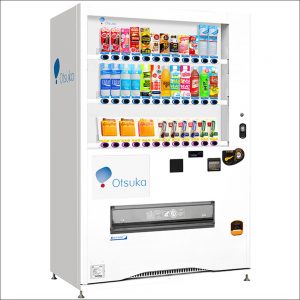
Vending machine IGR – D720 – MCS (MINI)
Price: Contact117,000,000 ₫Vending Machine IGR – D720 – MCS (MINI) is a suitable model for small spaces.
Contact information:
Hot Line: 0931 477 868
Email: sales@ittctech-vn.com
-
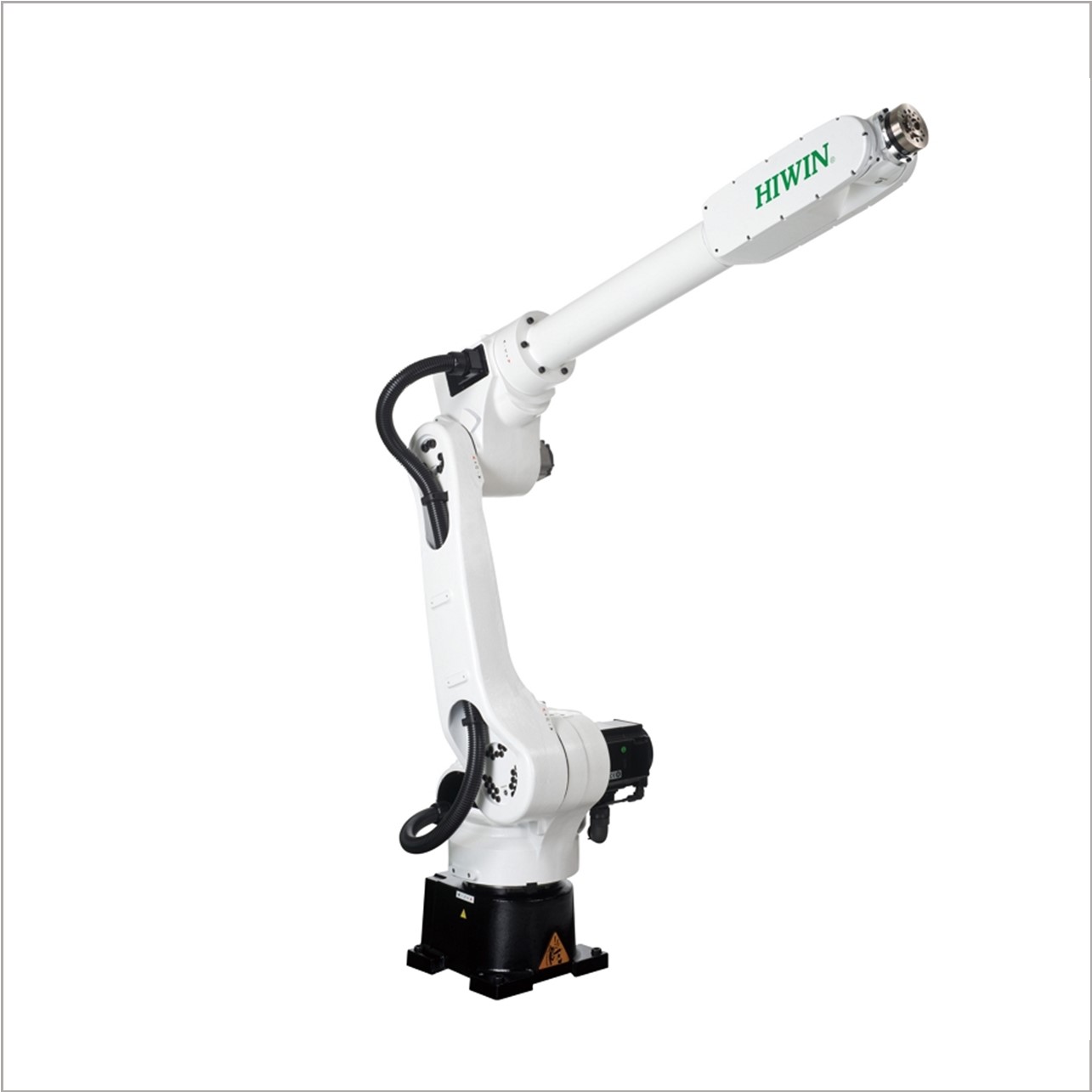
RA610-1869-GC Articulated Robot
Price: ContactFEATURES
Articulated robot RA610-1869-GC with 7kg payload and 1869mm max. motion radius is able to help people to do complex jobs such as dirty, difficult and dangerous jobs by utilizing its high degrees of freedom and high agility features.
It has a high IP protection rating for dust and water protection. It is equipped with three solenoid valves to easily control the pneumatic device. It provides best functions for various automation application such as workpiece loading/unloading, deburring and assembly.
-
RAS Series Torque Motor Rotary Table
Price: ContactFEATURES
- Used the direct drive motor with high acceleration, high torque, high precision and zero backlash.
- Single arm rotary table, compact structure, suitable for five-axis machine design with limited space.
- High-response simultaneous processing performance.
- Widely used in 3+2 axis, 4+1 axis positioning processing or 5-axis simultaneous processing.
APPLICATIONS
Metal processing, medical equipment, mold manufacturing, laser engraving machine, jewelry processing, welding machine, forging processing machine -
Contactors
Price: ContactEnables precise control for your motor.
Using CAN terminals for 10AF to 35AF that enable easy and safe wiring.
Surge absorbers can be fitted into models with 35AF or lower and the surge can be controlled with AC operated DC electromagnetic excitation for models with 50AF or higher.